Plastics are versatile materials that play an essential role in our modern world, but they are also often associated with challenges relating to resource consumption and waste management.
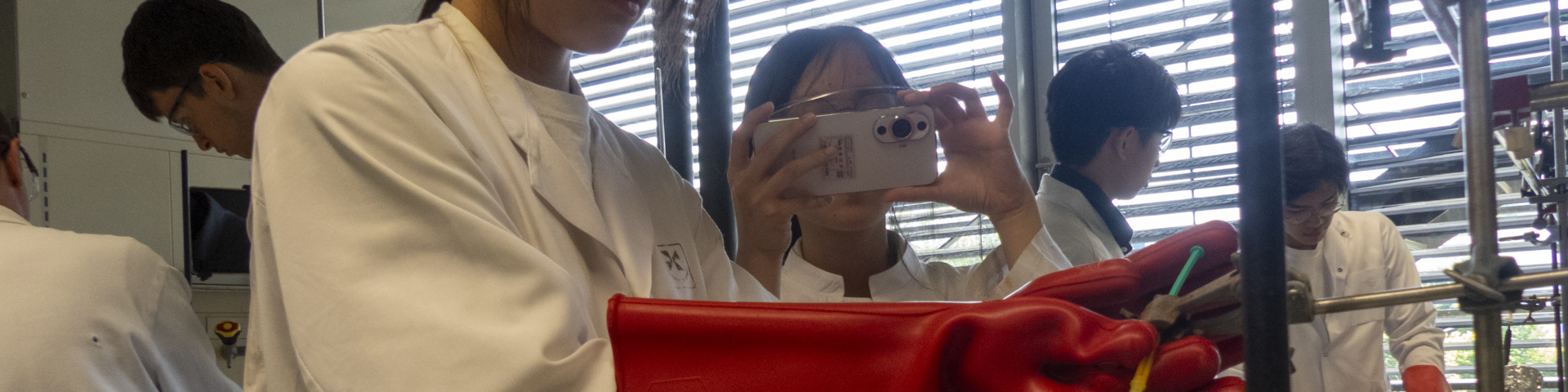
During the final week of the International Science Camp, participants first explored the chemical reactions involved in the synthesis of plastics (polymerisation, polycondensation and polyaddition) through hands-on experiments and investigated the properties of the resulting materials. Using polyvinyl chloride (PVC) as an example, they recreated the industrial production process and explored how different additives can transform a polymer into a material suitable for technical applications.
The second part of the course focused on improving the sustainability of plastics, including the distinction between bio-based and biodegradable plastics. After synthesising plastics from renewable raw materials, participants also had the opportunity to experimentally explore electrospinning as a method of recycling polystyrene waste. This process transforms waste plastic packaging into microfibers that can be used as high-performance filter materials – an example of upcycling.